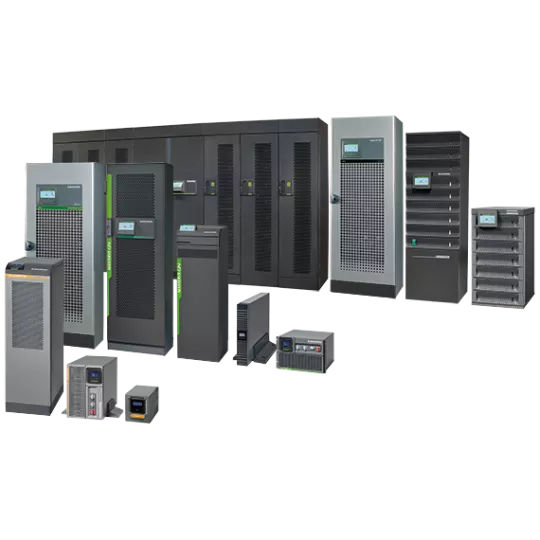
Uninterruptible Power Supply (UPS Devices)
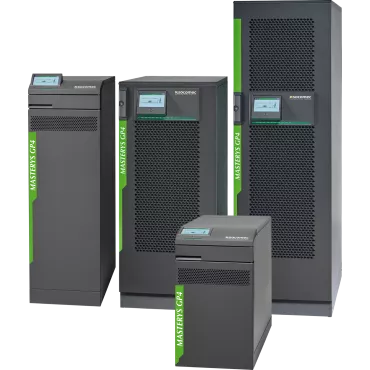
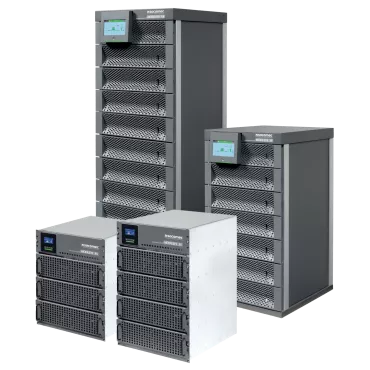
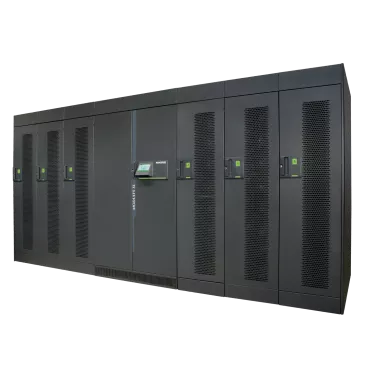

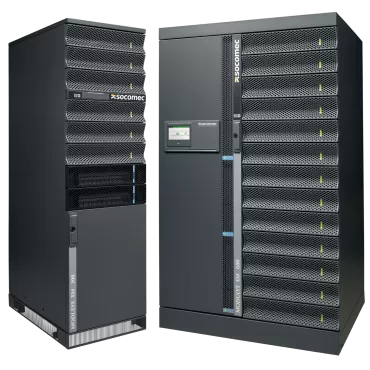

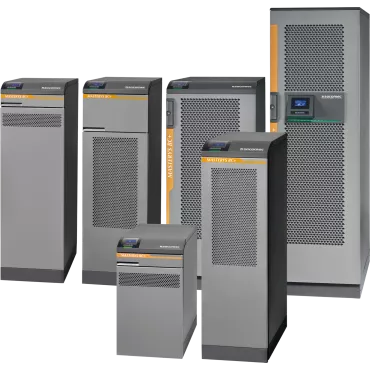

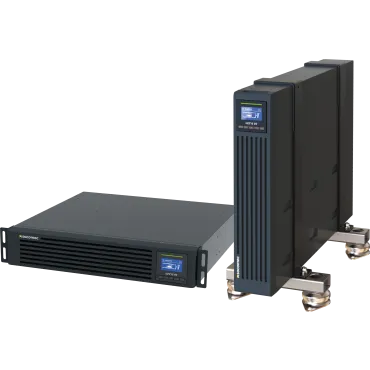
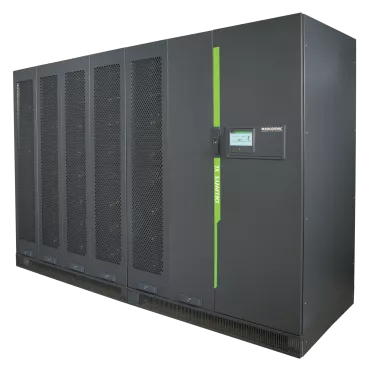
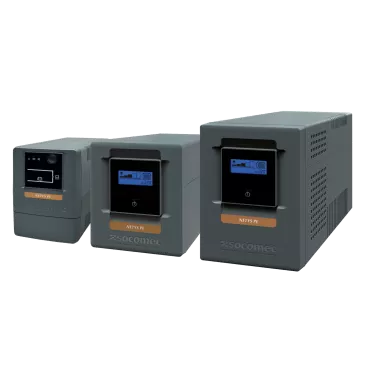
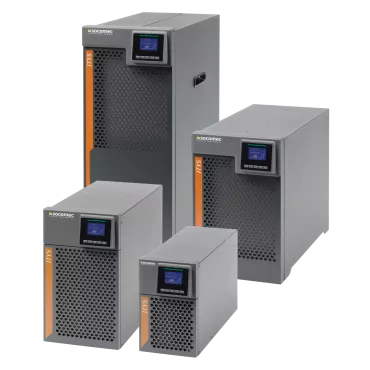
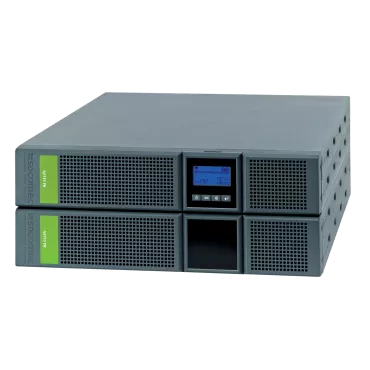
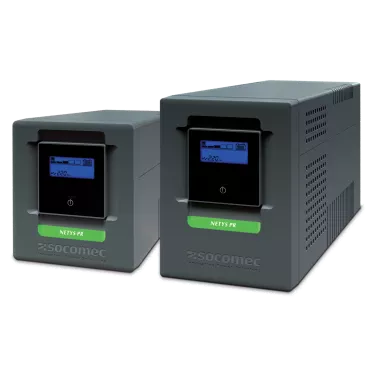
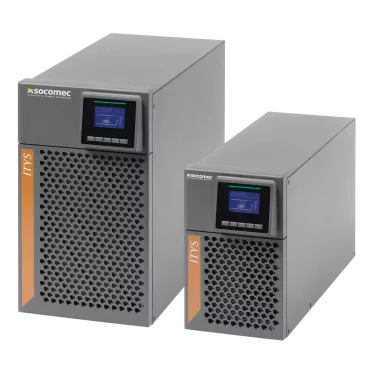
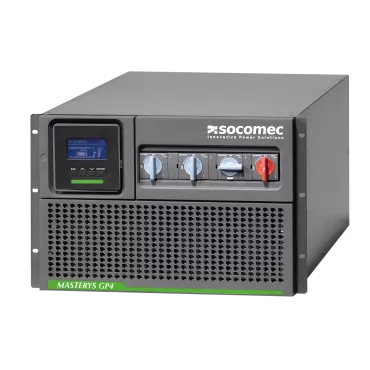
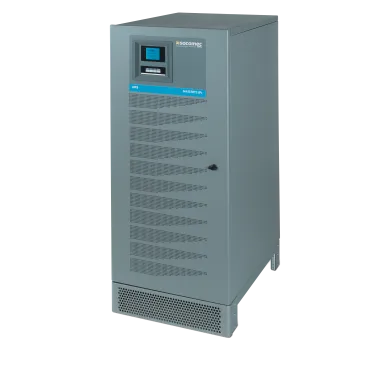
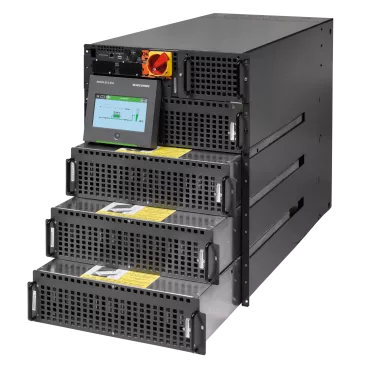
Our customers tell us that we are their best asset when it comes to protecting critical infrastructure and ensuring power availability with our high performance UPS solutions.
The reason? Because you’re our inspiration.
For more than 50 years, we have partnered with you to continuously evolve our products and services. Including modular UPS and scalable solutions, Socomec’s high performance UPS ensure the power protection of critical applications.
Designed with your current and future needs in mind, Socomec’s pioneering technologies guarantee the best possible reliability and highest levels of UPS availability for your electrical power supply.
Socomec high-performance uninterruptible power supplies (UPS) guaranteeing energy availability and providing power protection for the most critical applications. An UPS is a security guarantee against electrical hazards.
Understanding how an UPS delivers reliable power to a load
In modern electrical infrastructures, the UPS is a core component of system integrity.
Whether the goal is securing digital continuity, stabilising sensitive loads, or ensuring the availability of safety-critical equipment, power protection must operate with the same discipline and precision as the systems it safeguards.
SOCOMEC’s UPS systems have been developed over decades of close collaboration with the industries that rely on them most — operators who understand exactly how a voltage dip at the wrong moment can cascade into service disruption, production downtime or data loss.
Our approach combines electrical engineering expertise with advanced conversion technologies, ensuring that every installation benefits from stable, predictable and resilient power, even when the upstream supply is unpredictable.
Operating modes designed to stabilise utility power
Rather than offering a catalogue of “types of UPS”, SOCOMEC focuses on how the UPS behaves electrically when the network fluctuates, and how effectively it protects the load under real operating constraints.
Each operating mode delivers specific features that optimise power quality, energy performance and system resilience depending on real-world conditions.
Each mode represents a different philosophy of power conditioning — designed to strike the right balance between performance, protection and energy use.
Double Conversion Mode
Double Conversion mode continuously rebuilds the output power, creating a clean and independent waveform regardless of what the upstream network delivers. By fully isolating the load from the AC input, the UPS ensures that any distortion or instability present on the mains is completely filtered out.
In practice, it behaves much like a synchronised reference source in a test bench — the kind that produces a perfectly controlled signal even when the input is unstable or noisy. The load sees a supply that is as stable as if it were generated locally inside the installation.
There is no transfer time because the inverter is always in charge of supplying the load. Harmonics, frequency variations and voltage disturbances are effectively neutralised, making this mode the preferred choice wherever electrical conditions must remain controlled. This architecture guarantees that variations on the AC input have no impact on the quality of power supplied to the critical load.
Line Interactive Mode
Line Interactive mode keeps a direct electrical path to the load while compensating for voltage variations with a built-in stabilisation mechanism.
Its behaviour is often compared to a well-regulated tap on a transformer or an automatic voltage regulator that constantly adjusts to keep the downstream side steady, even when the upstream side fluctuates. The system corrects the drift before it becomes problematic, intervening only when the deviation grows too large.
Because the battery is used only when truly necessary, this mode offers an efficient balance between protection and energy consumption — particularly suitable for environments where the supply is generally stable but not perfect.
Smart Conversion Mode
Smart Conversion mode introduces an adaptive logic that continuously evaluates the condition of the electrical network.
It operates with the same philosophy as a smart control loop in an advanced power installation — one that monitors its environment, anticipates what the load requires and dynamically selects the most efficient operating path.
When the mains are stable, the UPS prioritises performance and efficiency. When the network becomes unpredictable, it shifts immediately to the mode that provides maximum stability.
Rather than imposing a fixed way of working, Smart Conversion acts like a technical operator with the experience to choose the right tool at the right moment, ensuring the best compromise between protection and energy optimisation.
High-performance UPS engineered for availability
For facilies operating critical application, electrical continuity is inseparable from performance, safety and service-level commitments. The challenges these environments face — increasing power density, the drive for efficiency, limited space, tighter sustainability requirements and the need for real-time operational insight — require UPS capable of more than simply providing backup power.
They must support a resilient, adaptive and data-driven electrical architecture.
UPS units engineered for resiliency at their core
Modern critical applications must operate under strict space, cost and deployment constraints.
A high-performance UPS therefore needs to integrate into diverse architectures without imposing unnecessary over-equipment. Scalability, optimised footprint, and streamlined installation all contribute to a power protection strategy that supports long-term service availability while accommodating future growth.
Whether the priority is right-sizing an installation or ensuring fast deployment, the UPS units must enable an optimised electrical layout rather than constrain it.
Designed to support high power density
As loads become more concentrated and cooling conditions more demanding, electrical protection must maintain stability even under rising density and rapidly fluctuating load profiles.
A UPS designed for such environments must offer consistent performance, stable operation across the full load range and the ability to adapt to increasing demand over time.
This capability ensures that critical applications can evolve without compromising power quality or operational security.
Focused on energy performance and sustainability
Across all sectors, the need to reduce operational costs and meet decarbonisation objectives is accelerating. UPS therefore play a direct role in improving the energy efficiency of the electrical infrastructure.
By reducing conversion losses, optimising operating modes and supporting fine-tuned power management, a modern UPS contributes to an overall reduction in environmental impact while strengthening energy performance targets.
This balance between resilience and efficiency is now essential for critical environments.
Driven by data, visibility and predictive insight
Electrical infrastructures are becoming increasingly complex and interconnected.
UPS units must therefore provide actionable information, enabling operators to supervise conditions in real time and anticipate maintenance needs.
Advanced monitoring, event analysis and predictive capabilities allow organisations to make informed decisions, reduce risks and maintain continuous operational readiness.
The ability to transform raw electrical data into operational intelligence is now a key factor in ensuring long-term availability.
Advanced power features for long-term continuity
By addressing architectural optimisation, high-density operation, energy performance and digitalisation, SOCOMEC’s UPS expertise supports the full spectrum of challenges encountered in critical applications — from data centres to industrial processes and essential public infrastructure.
The result is a power protection ecosystem designed not only to react during an outage, but to strengthen the resilience, efficiency and visibility of the entire electrical system.
Where Socomec's UPS expertise matters most
Data centres and digital infrastructure
Whether supporting a compact edge environment, a colocation or a hyperscale cloud facility, data centres operate under increasingly demanding electrical and thermal conditions. Rack densities continue to rise, applications become more dynamic and deployment cycles accelerate — all while availability expectations grow stricter.
A UPS must therefore do more than supply backup power. It must support the architecture behind it:
- enabling flexible right-sizing and modular growth,
- maintaining stability across fluctuating load profiles,
- contributing to energy performance objectives,
- and enabling expert-level maintenance practices in line with critical infrastructure requirements.
From edge to cloud, digital infrastructure depends on power protection that is as resilient and adaptive as the platforms it sustains. SOCOMEC’s expertise has been built alongside operators who must guarantee service continuity around the clock, regardless of the pressure placed on their electrical systems.
Healthcare and medical imaging
Hospitals and medical facilities rely on uninterrupted, clean power to safeguard diagnostic accuracy, ensure the functioning of critical equipment and protect patient data.
Trusted UPS partner for more than 50 years, Socomec has multiple references in the medical sector and our equipment is used in many hospitals to ensure absolute resilience. Our UPS solutions protect critical medical equipment, diagnostic systems, and life-support devices, providing the clean, uninterrupted power that healthcare facilities depend on. From medical imaging equipment requiring specialised power conditioning to emergency systems that cannot tolerate any interruption, Socomec's expertise ensures patient safety and operational continuity across healthcare environments worldwide.
Transport, infrastructure and telecoms
Transport networks, public infrastructure and telecommunications systems require power protection units that operate flawlessly, even when grid conditions are constrained, unstable or exposed to environmental disturbances. In these sectors, the consequences of a power interruption can extend far beyond equipment downtime — they affect operational safety, passenger flow, communication continuity and service-level commitments.
UPS units designed for these environments must therefore deliver more than basic power backup.
They need to ensure:
- continuous availability, with absolutely no tolerance for blackout scenarios,
- robust electrical behaviour that integrates seamlessly with existing architectures,
- a footprint adapted to technical rooms where space is often limited,
- and a level of reliability that supports round-the-clock operation across geographically distributed sites.
Over the years, operators in transport and telecoms have consistently valued the characteristics that set our approach to critical power apart. Fully integrated robust and resilient UPS designs, optimised footprint and simplified installation, even on the less accessible locations. This combination reinforces electrical robustness, improves fault tolerance and supports maximum availability.
Beyond the technology itself, these projects benefit from a strong emphasis on engineering expertise. Supporting complex power infrastructures — particularly in rail, signalling, telecom shelters or mission-critical public services — requires a deep understanding of operational constraints, installation conditions and regulatory frameworks. The ability to deliver responsive, high-quality installation and commissioning ensures a smooth deployment.
Advanced UPS technologies for mission-critical operations
Ultra-modular UPS architectures
Ultra-modular UPS architectures take the idea of modularity well beyond simple power scaling. These units are built so that electronic assemblies and power modules can be replaced or added while the UPS remains fully energised, with the load continuously protected. Instead of facing a fixed “end-of-life” moment. The system evolves in controlled steps, allowing components to be renewed progressively and the installation to operate reliably for far longer than conventional designs ever permit.
A true ultra-modular UPS is conceived to match the lifespan of the application it supports. This means designing for durability, adaptability and uninterrupted service. Rather than attempting to withstand ageing, the system is engineered to accommodate it — ensuring that the UPS remains as dependable and relevant after many years of operation as it was the day it was commissioned.
With this unique on the market approach, Socomec redefines lifecycle management: renewal becomes a predictable and risk-free process instead of a disruptive replacement project.
Forever young: designing a UPS that avoids end-of-life
Traditional monolithic UPS units often require full replacement, exposing the load during transition and generating significant operational and environmental cost.
Modular UPS architectures resolve this by allowing only the ageing electronic elements to be replaced, rather than the entire system.
For Socomec, instead of considering ageing as an endpoint, the Forever young concept allows the system to be upgraded throughout its lifetime, keeping pace with evolving technologies, standards and operational expectations.
With fully independent, hot-swappable modules, the UPS can support improved technologies at any time — such as updated HMI — without replacing the entire unit and without interrupting the load.
This design philosophy preserves the original investment, maintains compatibility with existing site infrastructure and enables modernisation works to be carried out online. The result is a UPS that remains continuously aligned with the needs of critical applications, year after year.
Li-Ion Battery UPS with integrated battery management systems
Li-Ion Battery UPS offer significant advantages over traditional lead-acid solutions, delivering compact footprint, lower weight, longer lifespan and reduced maintenance. These units feature embedded cell-to-cell monitoring and interactive control systems that dynamically adapt UPS operation to battery status, ensuring reliable performance in all critical conditions.
Frequently Asked Questions
What is a Uninterruptible Power Supply?
An Uninterruptible Power Supply, or UPS, is a system that provides instant backup power when the main electrical source fails. It delivers stable, regulated power even in the presence of voltage fluctuations, surges, or blackouts. Unlike standby generators, the UPS uses its battery power to bridge the gap instantly, ensuring no interruption to your equipment. It also filters and stabilizes electricity to protect sensitive electronics. In short, a UPS ensures business continuity and data integrity in every situation.
How does an uninterruptible power supply work?
A UPS system operates through a series of power conversion processes that guarantee continuous energy flow to the connected load. It typically includes a rectifier to convert AC to DC, a battery system to store energy, an inverter to convert DC back to clean AC, and a bypass line to ensure continuity during maintenance or faults. These stages ensure the load always receives clean and conditioned energy. SOCOMEC offers advanced modes of operation to balance efficiency and protection.
How long does an uninterruptible power supply last?
UPS lifespan varies depending on technology and design. Typical units require replacement every 15 years, but Socomec UPS systems have a proven lifetime of 15+ years. Socomec's ultra modular systems extend lifespan indefinitely by allowing individual modules and components to be upgraded or replaced without shutting down the load. Key factors influencing lifespan include operating temperature, load management, power quality, and maintenance. Socomec’s design ensures long-term adaptability and eliminates the traditional full-replacement cycle.
How do you choose a modular uninterruptible power supply?
Choosing a modular UPS requires assessing your electrical environment, operational priorities, and future growth. Determine the required power rating and redundancy level, ensuring the UPS can scale quickly as your load evolves. Battery architecture, monitoring quality, and maintainability also play key roles in long-term performance. A good modular UPS allows safe, front-access maintenance and component replacement without shutting down the system. The ideal choice supports long-term adaptability, predictable maintenance, and reduced lifecycle costs.