Master Energy Optimisation: Reduce Peak Time Electricity Costs with BESS in 2025
Electricity networks must be designed to handle maximum peak loads, not average consumption—a requirement that creates significant infrastructure costs for utility providers. To recover these expenses, energy suppliers charge businesses based on their highest power draw during specific periods, often resulting in demand charges that represent up to 40% of electricity bills.
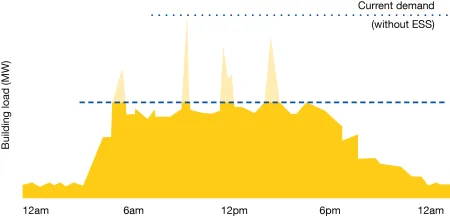
Peak shaving has emerged as the most effective strategy to control these costs. By strategically reducing power consumption or deploying stored energy during peak demand periods, companies can minimise expensive demand charges while maintaining operational efficiency. Through advanced technologies like Battery Energy Storage Systems (BESS), businesses can effectively "shave" their peak loads from the grid, contributing to both cost savings and grid stability.
What are Electricity Demand Charges and How do they Affect Companies' electricity Billing?
To understand the concept of Peak Shaving, it is crucial to first understand how electricity is billed to Commercial and Industrial users in specific parts of the globe.
Electricity demand charges are fees that companies pay based on their peak electricity usage during a specific period. Unlike energy consumption measured in kWh (total electricity used), demand charges are calculated based on maximum power drawn from the grid in kVA—typically measured during 15-minute or 30-minute intervals throughout your billing cycle.
How it works: If your facility draws 500 kVA for 14 minutes and then spikes to 800 kVA for just 2 minutes, your demand charge for that entire period is based on the 800 kVA peak—not your average consumption. This single spike can significantly impact your monthly electricity bill, especially for facilities with high power needs during short periods.
Here's a detailed look at how these charges affect companies in Germany, the UK and Italy:
Germany: The 7,000-Hour Rule
In Germany, the 7,000-hour rule is a regulation that allows energy-intensive companies to pay reduced grid charges if their facilities reach at least 7,000 full load hours per year and have a minimum annual consumption of 10 GWh. Full load hours are calculated by dividing total annual energy consumption of a company by its peak power load on the same period. Hence, the higher the peak power load, the less full load hours it will have. On the other hand, low peak power load will result in increased numbers of full load hours.
This rule is particularly beneficial for really high power intensive industries such as metal processing, paper, automotive and glass manufacturing, where energy costs are a significant part of operational expenses. By meeting these criteria, companies can reduce their grid charges by up to 80%, leading to substantial savings.
This 7,000-hour rule help utilities ensure major energy consumers smooth their power load at all times over the year, avoiding power grid stress and major transmission and distribution issues. In this way, they encourage major energy consumers to reduce pression on the utility grid to ensure a reliable power supply to every energy user.
United Kingdom: Demand Charges
In the UK, electricity demand charges are part of the Transmission Network Use of System (TNUoS) charges, which recover the costs of installing and maintaining the transmission system.
These charges are calculated based on the maximum power usage during peak periods on a monthly basis. For highest energy consumers in the UK with power load exceeding 100kVA multiple times per year, monthly demand charges will represent £7.26/kVA on the 2025/2026 period. For a 15MVA industry plant, it represents £108,900/month and more than £1.2 million/year only in demand charges, without even considering electricity prices.
Electricity Demand charges across Europe
Across Europe, electricity demand charges vary but generally follow similar principles. Companies are charged based on their peak usage, and for them, managing these peaks can lead to significant cost savings. Countries like Germany, UK and Italy have specific regulations to help energy-intensive industries manage these costs effectively.
Peak Shaving vs Load Shifting: Making the Right Choice
Peak shaving and load shifting both reduce electricity costs, but they work differently:
Peak Shaving:
- Reduces maximum power demand by deploying stored energy or on-site generation during spikes
- Cuts the peaks off your demand curve without changing when you operate
- Requires equipment (BESS, generators, solar arrays) but maintains operational flexibility
- Best for: Fixed production schedules, 24/7 operations, or processes that cannot be rescheduled
Load Shifting:
- Moves energy consumption from high-demand periods to off-peak hours
- Redistributes the demand curve by rescheduling activities
- Minimal equipment needed but requires operational adjustments (e.g., night-shift production)
- Best for: Flexible operations like EV charging, batch processing, HVAC pre-cooling
Example comparison: A manufacturing plant using load shifting might save €12,000 monthly by moving production to night shifts. The same facility using peak shaving achieves similar savings through battery discharge during peak times while maintaining daytime operations.
When to Choose Each Strategy
Choose Peak Shaving if:
- Your production schedule is fixed and cannot move to off-peak hours
- You face high demand charges (Germany's 7,000-hour rule, UK's TNUoS/DUoS)
- Operations require 24/7 uptime (data centers, hospitals, manufacturing)
- You have critical processes that cannot be interrupted or rescheduled
Choose Load Shifting if:
- Your operations have flexibility in timing (EV charging, warehousing)
- You can pre-cool or pre-heat facilities during off-peak hours (HVAC)
- Energy-intensive tasks can be scheduled for nights or weekends
- You want to maximize use of time-of-use (TOU) tariff structures
Optimal approach: Most businesses achieve maximum savings by combining both strategies—using BESS for unavoidable peak loads while shifting flexible processes to off-peak hours.
The Benefits of Peak Shaving
Peak shaving delivers value across three critical dimensions: financial savings, operational resilience, and environmental impact.
Reducing Demand Charges and Grid Fees
Implementing strategic peak shaving can lead to substantial cost reductions in 2025. A manufacturing facility using Socomec's Battery Energy Storage System in a country with high demand charges can save big on grid fees by maintaining peak power demand drawn from the grid under a set threshold.
Consider these proven methods for maximising savings:
- Load monitoring automation and Smart load distribution:Advanced systems predict usage patterns and adjust power consumption accordingly. For example a smart strategy could consist in spreading power-intensive operations across different time windows, like using electric heating units or coolers during the morning and stock the energy in form of temperature during peak hours.
- BESS optimisation: Strategic energy storage deployment during peak hours to take on power supply once a high threshold is exceeded.
- Installing Renewable Energy:
- Incorporating renewable energy sources, such as solar or wind power, to supply power during peak times
Optimising Energy Costs During Peak Hours
The beauty of using a BESS for peak shaving lies in its ability to integrate multiple energy use strategies, thereby maximising savings. One such strategy, often employed alongside peak shaving, is Electricity Tariff Management. This approach involves storing energy during off-peak hours when tariffs are low and then using it during peak hours when prices surge. Dynamic pricing models make BESS particularly valuable during peak hours, when electricity rates can increase significantly compared to base rates. Manufacturing facilities equipped with BESS solutions can effectively reduce their power draw from the grid during these expensive periods.
As energy consumption becomes increasingly electrified, the use of Battery Energy Storage Systems (BESS) is becoming more essential for efficient energy management. The combination of BESS with electrical heat pumps for example creates effective synergies in energy management. The stored energy can power these systems during peak demand, helping maintain operations while avoiding premium rates.
Additionally, facilities operating electric vehicle charging stations can also particularly benefit from this approach. By utilising stored power from batteries during high-rate periods, businesses can maintain their charging capabilities while managing costs efficiently.
Long-term ROI of Peak Shaving Solutions
The return on investment for peak shaving implementations consistently demonstrates strong value over time. According to verified case studies from Socomec Battery Energy Storage Systems customers, the financial benefits extend beyond direct cost savings, indeed businesses can achieve cost recovery through reduced utility charges but also enhanced operational efficiency thanks to a better electrical signal in their facility with the battery acting as a buffer between the grid and electrical equipment inside the facility:
- Enhanced Equipment Longevity: A stabilised power supply reduces wear and tear on electrical equipment, leading to longer lifespans and fewer replacements.
- Reduced Maintenance Costs: Higher electric signal quality in the building protects sensitive electrical equipment from voltage fluctuations and power surges; therefore minimising the need for frequent repairs and maintenance, resulting in lower overall maintenance costs.
- Improved Operational Reliability: With a more stable and reliable power supply, operations run more smoothly, reducing downtime and increasing productivity.
- Potential qualification for energy efficiency incentives if collocated with renewable energies.
While specific ROI periods vary based on factors such as:
- Demand charge price level and grid fees
- Peak load
- Peak demand patterns
- Local energy prices
- Local billing methods
- Energy consumption
- BESS system capacity and nominal power
For detailed ROI calculations specific to your facility, it's recommended to conduct a comprehensive energy audit and consult with Socomec ESS engineers who can analyse your existing consumption and peak power patterns, local utility rates and size the most profitable BESS according to this information.
Additionally, modern peak shaving systems, when collocated with renewable energy production, serve a pivotal role in environmental impact reduction. Through optimised energy storage and usage optimisations strategies, facilities decrease and control their electricity bills while maintaining production levels. Furthermore, this sustainable approach often qualifies businesses for green energy incentives, further improving long-term financial returns.
Essential Technologies for Effective Peak Shaving
Battery Energy Storage Systems (BESS)
Modern Battery Energy Storage Systems excel at precise load management through advanced lithium-ion technology. These systems can respond within hundreds of milliseconds to power fluctuations and maintaining voltage stability across the network. Socomec's battery cabinets offer 1C or 0.5C current ratings. A 1C rating means the battery can charge or discharge at nominal current for one hour. This technology is well-suited for peak shaving, where large amounts of energy are needed quickly to meet high power demands.
A properly sized BESS, like Socomec's SUNSYS HES solutions, can handle power loads from 100kW to 20MW, making them suitable for various industrial applications. It is important to note that BESS power coming from the converter cabinet can be used in addition to the power from the grid. If a facility has a grid connection of 2MVA and installs a 1MVA/1MWh BESS, he can now use 3MVA of power.
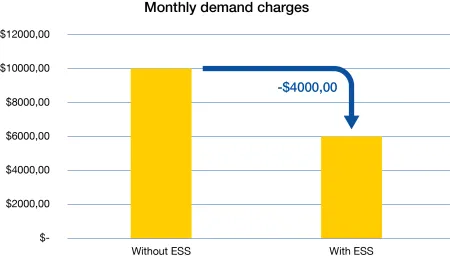
The Power Management System (PMS) from Socomec embedded within our SUNSYS HES L and SUNSYS HES XXL systems is equipped with native capabilities to handle peak shaving. It achieves this by setting charging and discharging thresholds, ensuring that the energy stored inside the battery is optimally utilised to maintain demand levels and reduce electricity costs at the same time. When consumption exceeds a certain threshold, the system automatically releases stored energy to prevent demand spikes.
Smart Energy Management Solutions
AI-powered control systems now form the backbone of advanced peak shaving operations. These platforms analyse consumption patterns across various stations and predict optimal times for load distribution or BESS activation.
Modern energy management interfaces enable effective coordination between on-site power generation and storage systems. This integration helps organisations optimise their demand charge reduction while maintaining operational flexibility to accommodate production changes.
Integrating Solar Power with Peak Shaving
What is solar peak shaving?
Solar peak shaving combines photovoltaic generation with BESS to reduce maximum power consumption from the grid. This integrated approach stores excess solar power during daylight hours for deployment during high-demand periods.
A manufacturing facility utilising this method might generate excess energy through solar panels at midday, storing surplus production in batteries for use during afternoon production peaks. This dual-source strategy maximises self-sufficiency and therefore reduces grid dependence.
A typical solar array paired with Socomec's storage solution can accordingly reduce peak loads while maintaining consistent power supply and quality.
Case Study: installing a stand-alone BESS in an aluminium plant in Germany
In January 2025, Socomec ESS team commissioned 2 SUNSYS HES XXL Battery Energy Storage Systems at an aluminium plant in Germany.
Remember the 7000-hour rule described in the introduction of this article? This industrial plant is consuming 210 GWh of energy per year with a peak demand of 35 MVA:
→ 210,000 MWh / 35 MVA = 6,000 hours.
Assuming demand charges of €150/kVA, it makes a hefty penalty bill of €5,250,000/year!
Now if this same company installs 2 systems of a 3 MVA / 3 MWh BESS SUNSYS HES XXL from Socomec, their peak power load can decrease to 29 MVA:
→ 210,000 MWh / 29 MVA = 7,241 hours at full power load.
→ The company is now accountable for only 20% of the demand charges billed (€150 × 20% × 29,000 kVA) = €870,000/year.
The company just saved €4,380,000 on their annual electricity bill and the investment in BESS will be able to pay for itself in over just one year.

That is without counting on other behind-the-meter applications that could be put into place to make this investment being profitable faster:
- Add solar production to benefit from on-site low cost renewable energy production.
- Use off-peak hour tariffs management charging strategy.
This 7000-hour rule helps utilities ensure major energy consumers smooth their power load at all times over the year, avoiding power grid stress and major transmission and distribution issues. In this way, they encourage major energy consumers to reduce pressure on the utility grid to ensure a clean and reliable power supply to every energy user.
BESS in this case is really a game changer: it helps intensive energy users to control their electricity costs and mitigate risks that arise from electricity procurement strategies and it helps utility companies keep a quality and reliable power grid at all times!
Peak Shaving: Key Benefits and Implementation
Demand charges are a common practice worldwide, involving penalties for businesses that exceed their peak consumption limits. Across North America, Europe, Asia, and Latin America, tariff structures differ, but they share common objectives: to stabilise the electrical grid, promote balanced electricity consumption, and allocate the cost of maintaining grid infrastructure to major power users.
For businesses, it is crucial to manage their electricity consumption efficiently during peak periods to avoid significant surcharges. Optimising energy usage or using load shifting methods are some strategies employed to reduce expenses related to demand charges.
For companies wishing to make a big step in managing or reducing their energy bill, the integration of Battery Energy Storage Systems (BESS) play a key role in reducing peak demand. Peak shaving with a Battery Energy Storage System involves reducing energy consumption during high-demand periods by using stored energy to smooth the load curve of the power drawn from the grid.
In conclusion, managing demand charges by adopting strategies such as peak shaving with BESS is essential for businesses to control their energy costs and contribute to a more stable electrical grid, especially as the electrification of energy usage increases globally.
To go further: Global Overview of Electricity Demand Charges and Penalties
Electricity pricing structures vary across countries, but many nations implement demand charges for businesses based on their peak power usage. These charges are designed to ensure grid stability and incentivise efficient energy consumption. We will examine how demand charges and penalties are applied worldwide, with a particular focus on North America and Europe. It is important to note that specific rules and penalties may vary depending on the electricity provider and contract type.
North America
United States
In the U.S., most commercial and industrial electricity consumers are subject to demand charges. Utilities measure the highest 15-minute or 30-minute power usage within a billing cycle and apply charges accordingly. Businesses exceeding their contracted demand may face significant penalties or higher tariffs. Demand charges encourage companies to spread out their electricity usage and avoid peak demand spikes.
Canada
Canada follows a similar model, with demand charges being a significant component of electricity bills for businesses. In provinces like Quebec (Hydro-Québec) and Ontario (Hydro One), businesses are billed based on their peak kW or kVA demand. Some regions offer demand response programs, allowing businesses to reduce costs by lowering consumption during peak periods.
Europe (see above for UK and German example)
France
French businesses subscribe to a specific power capacity (in kVA), and exceeding it results in penalties. The tariffs are determined by the grid operator (Enedis) and vary by region. France also offers capacity-based contracts to help businesses better manage their energy needs.
Spain & Italy
Both Spain and Italy operate on a similar principle: businesses agree on a contracted power level, and exceeding it results in significant financial penalties. These countries also provide incentives for off-peak usage, helping to distribute electricity demand more evenly.
Benelux (Belgium, Netherlands, Luxembourg)
Businesses in Belgium, the Netherlands, and Luxembourg must adhere to their contracted power limits. Demand-based billing applies, with penalties for exceeding agreed-upon thresholds. These penalties can vary depending on the network operator and contract type.
Other Regions
Australia
Australian businesses face demand charges based on peak usage, with some flexibility in choosing tariff structures. Many energy providers offer time-of-use pricing to mitigate demand charges.
Asia (Japan, China, India, etc.)
Asian countries generally follow a demand-based billing model for businesses, though structures vary widely. Japan and China have highly regulated electricity markets where industrial consumers pay based on peak demand. India, on the other hand, has demand penalties in place to discourage excessive grid load during peak hours.
Latin America
Countries like Brazil, Mexico, and Argentina implement demand charges for industrial users. These charges are typically structured around peak-hour consumption to promote grid stability.